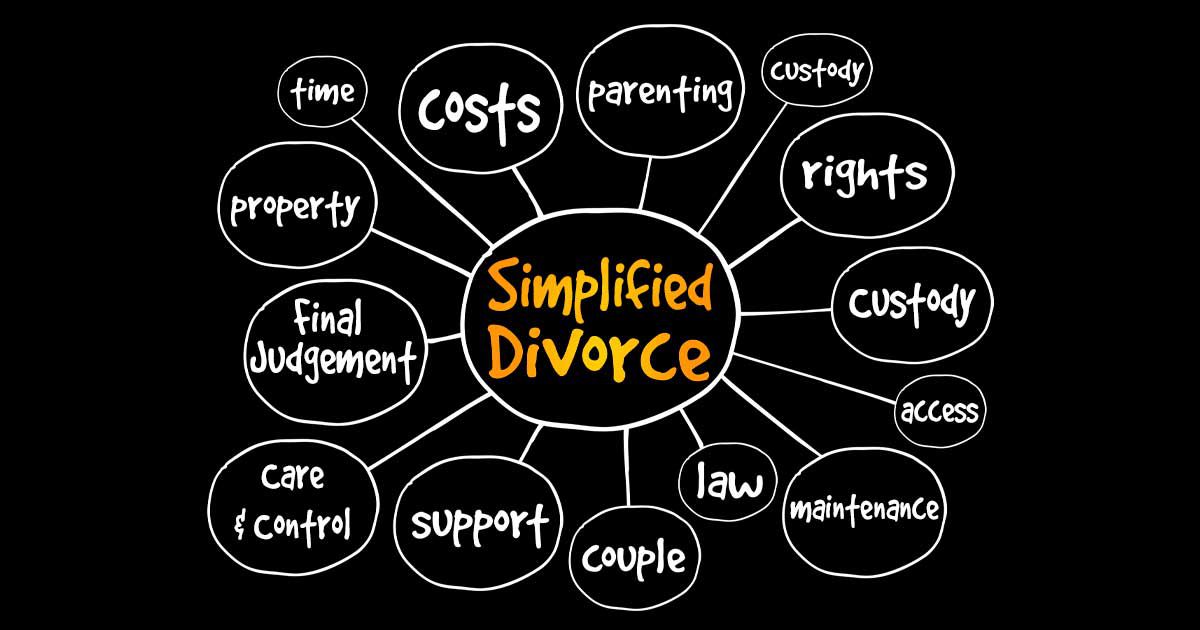
A Simplified Track divorce is the streamlined divorce procedure available when both spouses agree that the marriage should end before the matrimonial application for divorce is filed.
Importantly, this does not mean that you must agree on everything.
Under Singapore’s current divorce procedure, spouses may use the Simplified Track where they agree on the divorce itself (i.e. the facts and particulars of the divorce) but still disagree about matters such as children, maintenance or the division of matrimonial assets. These unresolved issues can be dealt with separately.
This is an important distinction because many couples assume that a disagreement about their HDB flat, children or finances means that their divorce must proceed on the Normal Track. However, disagreements over these ancillary matters do not, by themselves, prevent a divorce from proceeding on the Simplified Track.
The key starting question is: Do both spouses agree to the divorce before filing?
If yes, the divorce itself can generally proceed on the Simplified Track. If no, the application generally proceeds on the Normal Track.
Key Points
- Simplified Track does not mean everything must be agreed.
- Both spouses must agree on the divorce before the application is filed.
- Children, maintenance and matrimonial assets are dealt with as ancillary matters.
- Ancillary matters can remain disputed while the divorce proceeds on the Simplified Track.
- Where the divorce and all ancillary matters are agreed, the process is generally more straightforward.
- If you have children under 21, the Mandatory Co-Parenting Programme (CPP) may need to be completed before filing.
– Do We Have to Agree on Everything?
– Divorce Process at a Glance
– What Should We Consider?
– What Happens to the Matrimonial Home?
– How Are Matrimonial Assets Divided?
– What About Maintenance?
– How Does Simplified Divorce Work?
– How Much Does It Cost?
– Can I File Without a Lawyer?
– What If We Cannot Agree?
– Frequently Asked Questions
– Do We Have to Agree on Everything?
– Divorce Process at a Glance
– What Should We Consider?
– What Happens to the Matrimonial Home?
– How Are Matrimonial Assets Divided?
– What About Maintenance?
– How Does Simplified Divorce Work?
– How Much Does It Cost?
– Can I File Without a Lawyer?
– What If We Cannot Agree?
– Frequently Asked Questions
Do We Have to Agree on Everything?
No. This is one of the most important things to understand about the current Simplified Track.
There are essentially two situations:
Divorce and ancillary matters are agreed
You agree that the marriage should end, on the fact and particulars of the divorce, and have also settled matters involving children, maintenance, property and other matrimonial assets.
Divorce is agreed but ancillary matters are not
You both agree to the divorce, including the facts and particulars of the divorce, but one or more ancillary matters remain disputed.
For example, you may agree to divorce but disagree about:
- who should have care and control of the children;
- access arrangements;
- child or spousal maintenance;
- what should happen to the HDB flat;
- CPF monies; or
- how other matrimonial assets should be divided.
The divorce itself can still proceed on the Simplified Track while unresolved ancillary matters continue to be addressed.
Singapore Divorce Process at a Glance

The flowchart illustrates an important distinction: agreeing to the divorce itself is different from agreeing on everything that happens as a result of the divorce.
What Should We Consider Before Agreeing?
Even though you do not need to resolve every ancillary matter before using the Simplified Track, you should identify what has been agreed and what remains unresolved.
Where there are children, this may include:
Custody– responsibility for making major decisions concerning matters such as the child’s education, healthcare and religion.
Care and control – which parent is primarily responsible for the child’s day-to-day care and living arrangements.
Access – the arrangements for the other parent to spend time with the child.
Child maintenance – how the child’s ongoing expenses will be met.
An agreement to divorce should not be confused with an agreement on these separate issues.
What Happens to the HDB Flat or Matrimonial Home?
For many couples, the matrimonial home is their largest asset and one of the most important issues to resolve.
Depending on the circumstances, consideration may need to be given to whether the property will be:
- sold;
- retained by one spouse;
- transferred from one spouse to the other; or
- dealt with subject to applicable HDB requirements.
There may also be questions concerning the outstanding housing loan, CPF monies used towards the property and how the eventual net proceeds should be divided.
You should not assume that agreeing to divorce means you must immediately agree to a particular arrangement for the matrimonial home.
How Are Matrimonial Assets Divided?
Matrimonial assets can extend beyond the family home and may include savings, investments, shares, businesses, insurance policies, vehicles and other assets acquired during the marriage.
Where the spouses have reached an agreement, the agreed division can be reflected in the divorce documents.
Where agreement has not been reached, the dispute over matrimonial assets does not necessarily prevent the divorce itself from proceeding on the Simplified Track.
What About Maintenance?
Depending on your circumstances, there may also be issues concerning:
- child maintenance;
- spousal maintenance;
- monthly or other maintenance arrangements; and
- how particular expenses for the children will be shared.
Maintenance arrangements can have continuing financial consequences after divorce. They should therefore be considered carefully rather than treated simply as another term that needs to be agreed to complete the divorce.
How Does the Simplified Divorce Process Work?
The process generally involves preparing and filing the matrimonial application and supporting documents and proceeding to an uncontested divorce hearing.
If the documents are in order, the Court will schedule the uncontested divorce hearing. The parties and their lawyers generally do not need to attend the hearing.
If the Court is satisfied that the marriage has irretrievably broken down, it may grant an Interim Judgment.
The Final Judgment cannot ordinarily be extracted until at least three months after the Interim Judgment, and any outstanding ancillary matters must also have been resolved.
How Much Does a Simplified Divorce Cost?
The cost of a Simplified Track divorce will depend on your circumstances and the matters that need to be covered in the divorce documents. Our fees for straightforward simplified divorces start from:
S$1,500 – No Children & No Property
For a straightforward divorce where both spouses have agreed to divorce and there are no children and no matrimonial property to deal with.
The fee starts from S$1,500 and covers the preparation and filing of the necessary divorce documents and progressing the uncontested divorce through the Simplified Track.
S$2,500 – With Children and/or Property
Where the divorce also involves children, an HDB flat or other matrimonial property, maintenance or financial arrangements, additional terms need to be properly recorded in the divorce documents.
For these simplified divorces, our fees start from S$2,500, depending on the matters involved and the work required.
Not sure which applies to you? Contact us with some basic information about your circumstances and we can explain which fee range is likely to apply.
Can I File a Simplified Divorce Without a Lawyer?
Yes. You are not legally required to engage a lawyer to obtain a divorce in Singapore.
Eligible applicants may use the Singapore Courts’ Divorce eService, while self-represented parties may also file through eLitigation at the Service Bureau.
However, filing the divorce documents and deciding whether the terms you have agreed to are appropriate and best protect you and your children’s interests are two different matters.
Legal advice may be particularly useful where your agreement involves children, an HDB flat or private property, CPF monies, maintenance or significant matrimonial assets.
What If My Spouse and I Cannot Agree?
The first question is what you disagree about.
If you cannot agree on the divorce itself before filing, the application will generally proceed on the Normal Track.
However, if you both agree to the divorce but disagree about children, maintenance or matrimonial assets, those disagreements do not automatically prevent the divorce from proceeding on the Simplified Track.
Depending on the issues involved, negotiation or mediation may help resolve some or all of the remaining matters without requiring the Court to determine every dispute.
Frequently Asked Questions
The terms are often used together. Under the current Court framework, the important requirement for entering the Simplified Track is that both spouses agree on the divorce before filing. They do not necessarily need to have resolved every ancillary matter.
Potentially, yes. If you agree on the divorce itself, unresolved issues concerning the matrimonial home do not necessarily prevent the divorce from proceeding on the Simplified Track.
Potentially, yes. Issues concerning children are ancillary matters and may remain unresolved even where both spouses agree on the divorce itself.
For the uncontested divorce hearing on the Simplified Track, the parties and their lawyers generally do not need to attend.
That depends on your circumstances. Where the proposed agreement affects children, property, CPF monies, maintenance or significant assets, obtaining advice before committing to the terms can help you understand their legal and financial consequences.
Ready to Discuss a Simplified Divorce?
If you and your spouse have agreed to divorce, our family lawyers can help you understand whether the Simplified Track applies, what still needs to be resolved and the appropriate next step.
We can also advise on agreed arrangements involving children, maintenance, HDB or private property, CPF monies and other matrimonial assets before those terms are incorporated into your divorce documents.
To discuss your circumstances with our family law team, call +65 6337 0469 or email consult@gjclaw.com.sg.

We’re Here for You
We offer a range of consultation options depending on the guidance you need, from a Free 20-minute Divorce Process Consultation to a Strategic Divorce Consultation for personalised legal advice.
Contact us and we can help you choose the right option for your circumstances.