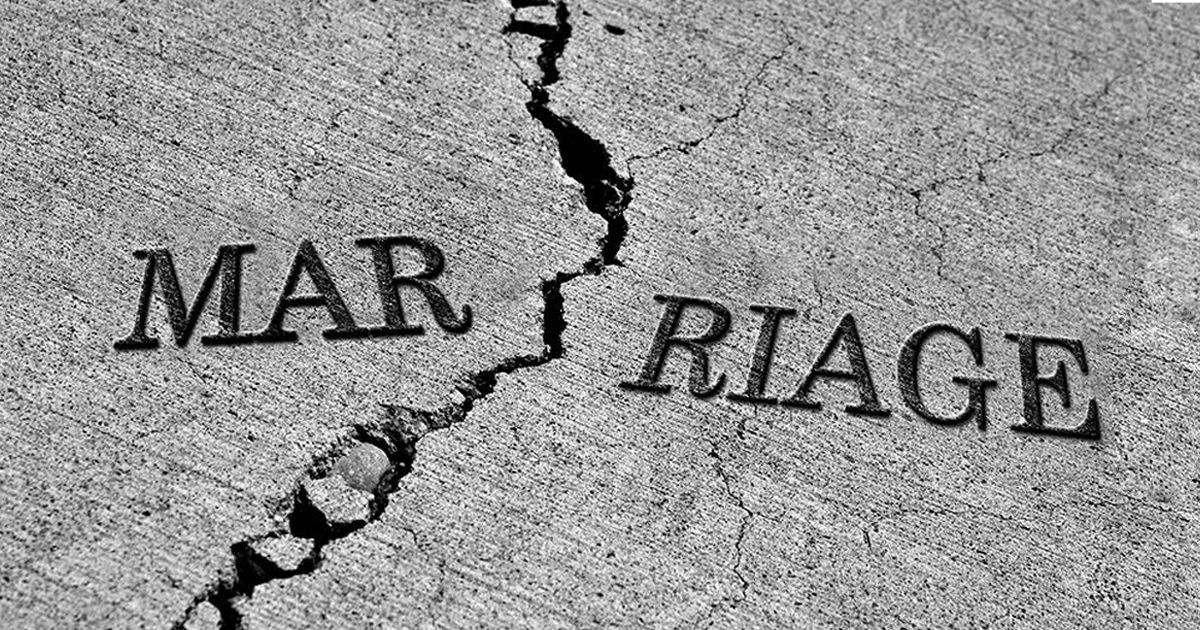
A common misconception is that if both spouses agree that the marriage is over, they can simply proceed with a divorce. However, Singapore law imposes what is commonly referred to as the “3-year marriage bar“.
Even where both parties agree that the relationship has broken down, they will generally need to wait until they have been married for at least three years before commencing divorce proceedings.
That said, the law does recognise that some situations are exceptional. Where a spouse has suffered exceptional hardship or where there has been exceptional depravity on the part of the other spouse, the court may grant permission for divorce proceedings to be commenced before the three-year period has elapsed. However, the threshold is high and the circumstances must be genuinely exceptional.
In this article, we explain the three-year rule, the limited exceptions available, and some of the alternative options that may be considered if you are not yet eligible to file for divorce.
– I Have Been Married for Less Than Three Years. Can I Divorce?
– What reasons must I show to the Court if I seek permission?
– What Are the Exceptions to the Three-Year Marriage Rule?
– How does the Court consider this rule?
– Is there anything else I must do to support my case?
– Are there alternatives to divorce?
I Have Been Married for Less Than Three Years. Can I Divorce?
Under Singapore law, a couple must generally be married for at least three years before filing for divorce. However, a spouse may apply to the Court for permission (known as “leave“) to commence divorce proceedings earlier where exceptional circumstances exist.
The Court may grant leave where:
- You have suffered exceptional hardship; or
- Your spouse has behaved with exceptional depravity.
This application for leave is essentially a request for the Court’s permission to proceed with a divorce before the three-year period has elapsed. The Court will consider the specific facts of the case and whether the circumstances are sufficiently serious to justify an exception to the usual rule.
If leave is granted, divorce proceedings may commence despite the marriage being less than three years old.
What reasons must I show to the Court if I seek permission?
- That you have suffered exceptional hardship during your marriage; or
- Your spouse has behaved with exceptional depravity, i.e. behaved unusually atrociously.
What Are the Exceptions to the Three-Year Marriage Rule?
If you wish to commence divorce proceedings before being married for three years, you will generally need to obtain the Court’s permission.
The Court may grant permission where:
Exceptional Hardship
You have suffered exceptional hardship during the marriage. The hardship must generally be more serious than the ordinary difficulties, disagreements, or unhappiness that may arise in a marriage.
Exceptional Depravity
Your spouse has behaved with exceptional depravity. This refers to conduct that is unusually serious, shocking, or reprehensible and goes beyond the normal breakdown of a marital relationship.
The Court will consider the circumstances of each case and determine whether the facts justify an exception to the usual three-year requirement.
In the case of Ng Kee Shee v Fu Gaofei, the High Court granted leave to commence divorce proceedings before three years had elapsed where the husband’s wife abandoned the marriage shortly after the wedding, returned overseas, refused to resume the relationship, and repeatedly stated that she would never return to him. The Court concluded that the circumstances amounted to “exceptional hardship” that went beyond the ordinary consequences of a marital breakdown.
In UNU v UNV, the Court emphasised that a spouse’s consent to an application for leave to file for divorce before three years had elapsed is not, by itself, sufficient to establish “exceptional hardship or exceptional depravity“.
Even where both parties agree that the marriage has broken down and wish to divorce, the applicant must still satisfy the Court that the circumstances are sufficiently serious to justify an exception to the three-year marriage rule.
As stated by the Court in Ng Kee Shee, this high threshold is put in place to “promote the sanctity of marriage and to ensure that Parties do not rush in and out of marriage capriciously.”
How does the Court consider this rule?
The Court must consider whether the allegations made were such that, if proved, would amount to exceptional hardship.
The Court could consider hardship arising from the past conduct of the other spouse, the present hardship, and hardship arising from having to wait for the three-year bar to elapse.
The hardship suffered must be out of the ordinary, judged by the prevailing standards of acceptable behaviour between spouses.
Read more: Exception To The “Three-Year-Marriage Bar Rule
Is there anything else I must do to support my case?
If you have been suffering mentally over the course of your marriage, it is highly recommended that you undergo a psychiatric assessment, for example, at the Institute of Mental Health (“IMH”), to obtain a psychiatric report stating your mental health condition.
Similarly, if your physical health has been affected during the marriage, you may wish to obtain an official medical report from a doctor detailing how your physical health has suffered.
These medical reports can support your leave application to file for divorce despite the three-year time bar.
Are there alternatives to divorce?
Below, we cover the options of Informal Separation, Annulment of Marriage, Deed of Separation and judicial separation as alternative solutions for those considering ending their marriage before the 3-year bar.
Informal Separation
Informal separation refers to a situation where you and your spouse privately agree to lead separate lives without any formal agreement or court process involved.
Thus, while you and your spouse may still be legally married, Parties may agree to move on and start their lives afresh. This type of agreement operates based on mutual trust and respect.
It is feasible if you and your spouse can maintain a cordial relationship and walk away from the marriage on good terms. In settling the matter yourselves, Parties can also save time and legal costs.
Annulment of Marriage
Alternatively, pursuant to Section 106 of the Women’s Charter (“WC”), Parties may wish to annul the marriage if they can satisfy any of the grounds for annulment.
The effect of an annulment is that the Parties’ marriage becomes voidable, meaning that the Parties are put into the position as if the marriage had not existed at all.
Read more: Annulment of Marriages in Singapore
Deed of Separation
Parties may also enter into a Deed of Separation (“DOS”). The DOS is a written agreement between Parties, stipulating that Parties agree to live separately for three years.
Parties can discuss and agree on the terms stated in the DOS. This drafting process and entering into a DOS does not involve the Courts.
Still, it is a binding agreement that Parties can later rely on when they file for a divorce after the three-year time bar. Hence, after three years have lapsed, Parties can use the DOS to file for a divorce based on three years’ separation with consent.
You may consider this alternative if your marriage has not passed the 3-year mark and you and your spouse are agreeable to entering this DOS.
Read more: Deed of Separation
Judicial Separation
Last but not least, Parties who are time-barred from filing for a divorce may consider filing for Judicial separation (“JS”). JS is a form of separation that requires formal proceedings through the Court’s system.
Like a divorce process where you have to show that the marriage has irretrievably broken down, you will likewise have to do so for a JS. However, a JS differs from a divorce in terms of the outcome.
After JS proceedings, you and your spouse will be formally separated, but the Parties will remain legally married. Parties will still have to commence divorce proceedings after the 3-year time bar if the end goal is divorce.
Read more: Methods Of Separation Before Pursuing Divorce In Singapore
We’re here for you
Our lawyers at GJC Law offer a free 20-minute consultation to explain the divorce process and determine whether you qualify for divorce in Singapore.
Our goal is to help you find a resolution that works for you.