
An annulment in Singapore, legally referred to as a nullity of marriage, is a court process concerning a marriage that is either void or voidable under the Women’s Charter.
This is different from a divorce. A divorce brings a legally valid marriage to an end. An annulment, on the other hand, concerns circumstances in which the marriage is legally void or where the law permits a valid marriage to be annulled on specific statutory grounds.
Once a judgment of nullity takes effect, the parties are no longer legally married. In the case of a void marriage, the marriage is legally invalid on one of the grounds prescribed by law. In the case of a voidable marriage, the marriage is treated as having existed until the judgment of nullity is made final, after which it is annulled.
Importantly, a marriage does not qualify for annulment simply because it was short-lived, the parties regret getting married, or they separated shortly after the wedding. Singapore law provides specific grounds on which a marriage may be treated as void or voidable, and those requirements must be established before the Court.
This guide explains the grounds for annulment in Singapore, the distinction between void and voidable marriages, the applicable time limits, the court process, and the key differences between annulment and divorce.
Key Points
- An annulment in Singapore is different from a divorce and is only available where a marriage is void or voidable on a ground recognised under Singapore law.
- There are specific grounds for annulment, including non-consummation due to incapacity or wilful refusal, lack of valid consent, and certain other circumstances prescribed by law. Different grounds apply depending on whether the marriage is void or voidable.
- The evidence required for an annulment will depend on the particular ground relied upon and the circumstances of the case. Depending on the ground, relevant evidence may include medical evidence, communications between the parties, witness evidence or official records.
- The annulment process in Singapore generally involves filing an originating application for nullity with the Family Justice Courts and establishing the statutory ground on which the marriage is said to be void or voidable.
- An annulment may still involve important ancillary and practical issues, including arrangements concerning children and the division of matrimonial assets. Where relevant, the parties may also need to address the consequences for CPF monies and HDB property.
- If you do not qualify for an annulment, other options may include divorce, judicial separation, a Deed of Separation or informal separation, depending on your circumstances. However, do note that save for a divorce, the other options does not legally end the marriage.
– Annulment in Singapore
– Annulment vs Divorce
– Who Can Get an Annulment?
– Void Marriages
– Voidable Marriages
– Evidence for Annulment
– Annulment Process
– How Long Does Annulment Take?
– Children After Annulment
– Property and Finances
– HDB Flats and Annulment
– After an Annulment
– Alternatives to Annulment
– Frequently Asked Questions About Annulment
– Annulment Lawyers in Singapore
– Annulment in Singapore
– Annulment vs Divorce
– Who Can Get an Annulment?
– Void Marriages
– Voidable Marriages
– Evidence for Annulment
– Annulment Process
– How Long Does Annulment Take?
– Children After Annulment
– Property and Finances
– HDB Flats and Annulment
– After an Annulment
– Alternatives to Annulment
– Frequently Asked Questions About Annulment
– Annulment Lawyers in Singapore
What Is an Annulment in Singapore?
An annulment is a court process concerning the legal validity of a marriage.
Under the Women’s Charter 1961, a marriage may be void or voidable on specific grounds prescribed by law.
A void marriage is one that is legally invalid because it falls within one of the statutory grounds on which a marriage is treated as void.
A voidable marriage, on the other hand, remains legally valid unless and until the Court grants a judgment of nullity and that judgment is made final. Until then, the marriage is treated as having existed.
This distinction is important because an annulment is not simply another way of obtaining a divorce. A divorce terminates a legally valid marriage, whereas nullity proceedings concern whether the marriage is void or whether a valid marriage may be annulled on one of the specific grounds recognised by law.
Annulment vs Divorce in Singapore
People sometimes consider annulment and divorce as interchangeable ways of ending a marriage. Legally, they are different.
This is why someone who has been married for less than three years cannot simply choose annulment because divorce is not yet ordinarily available. There must still be a recognised legal ground for annulment.
Read more: Legal Difference Between Annulment and Divorce
Can I Get an Annulment in Singapore?
The starting question is: Is the marriage void or voidable under the Women’s Charter?
The circumstances in which a marriage may be treated as void or voidable are relatively specific and are set out by law. It is therefore useful to consider the two categories separately.
What Is a Void Marriage?
A void marriage is a marriage that is not legally valid under Singapore law.
Under section 105 of the Women’s Charter, a marriage may be void where it falls within one of the statutory grounds recognised by the Act. These include circumstances where:
- one party was already married to another person at the time of the marriage;
- either party was below 18 years old, unless the marriage was authorised by a special marriage licence;
- the parties were within the prohibited degrees of relationship, subject to any applicable statutory exception or licence;
- the parties were not respectively male and female at the date of the marriage, subject to the provisions of the Women’s Charter concerning sex reassignment; or
- a marriage solemnised in Singapore did not comply with certain essential legal requirements, including where it was solemnised without a valid marriage licence or special marriage licence, or by a person who was not the Registrar or a licensed solemniser.
These are specific statutory grounds. A mistake, procedural irregularity or problem connected with the wedding does not necessarily mean that the marriage is void.
What Is a Voidable Marriage?
Section 106 of the Women’s Charter sets out the specific circumstances in which a marriage may be voidable. A voidable marriage remains legally valid unless and until a judgment of nullity is granted and made final.
These grounds include:
The marriage was not consummated because of incapacity
A marriage may be voidable where it has not been consummated because either party was incapable of consummating the marriage.
Wilful refusal to consummate the marriage
A marriage may also be voidable where it has not been consummated because the respondent has wilfully refused to consummate the marriage.
The fact that a marriage has simply not been consummated does not, by itself, establish either of these grounds. The reason for the non-consummation and the surrounding circumstances will be important.
There was no valid consent to the marriage
A marriage may be voidable where either party did not validly consent to it, including where the lack of valid consent arose because of:
- duress;
- mistake;
- mental disorder; or
- some other circumstance affecting the validity of the person’s consent.
Mental disorder rendering a party unfit for marriage
A separate ground may apply where, at the time of the marriage, either party was capable of giving valid consent but was suffering, whether continuously or intermittently, from a mental disorder of such a kind or to such an extent as to be unfit for marriage.
Venereal disease in a communicable form
A marriage may be voidable where, at the time of the marriage, the respondent was suffering from a venereal disease in a communicable form.
Pregnancy by another person
A marriage may also be voidable where, at the time of the marriage, the respondent was pregnant by someone other than the applicant.
These are the statutory grounds set out in section 106 of the Women’s Charter
What Evidence Is Needed for an Annulment?
The evidence needed for an annulment will depend on the particular ground relied upon and the circumstances of the case. The Court must be satisfied that the relevant statutory ground for nullity has been established.
Depending on the case, relevant evidence may include:
- Affidavit or witness evidence – setting out the circumstances of the marriage and the facts relied upon in support of the application.
- Medical reports or other medical evidence – where incapacity to consummate the marriage is relied upon.
- Medical or psychiatric evidence – where mental disorder or a person’s fitness for marriage is relevant.
- Medical records or test results – where the ground concerns a venereal disease in a communicable form.
- Messages, emails or other communications – which may assist in establishing matters such as wilful refusal to consummate the marriage, duress, lack of consent or other relevant circumstances.
- Official records and documents – for example, records showing that one party was already legally married at the time of the marriage in question.
- Medical or other evidence of pregnancy – where the ground relied upon is that, at the time of the marriage, the respondent was pregnant by a person other than the applicant.
Not every annulment application will require all of these forms of evidence. The nature and strength of the evidence required will depend on the specific statutory ground for nullity, whether the relevant facts are disputed, and the circumstances of the particular marriage.
How Do I Apply for an Annulment in Singapore?
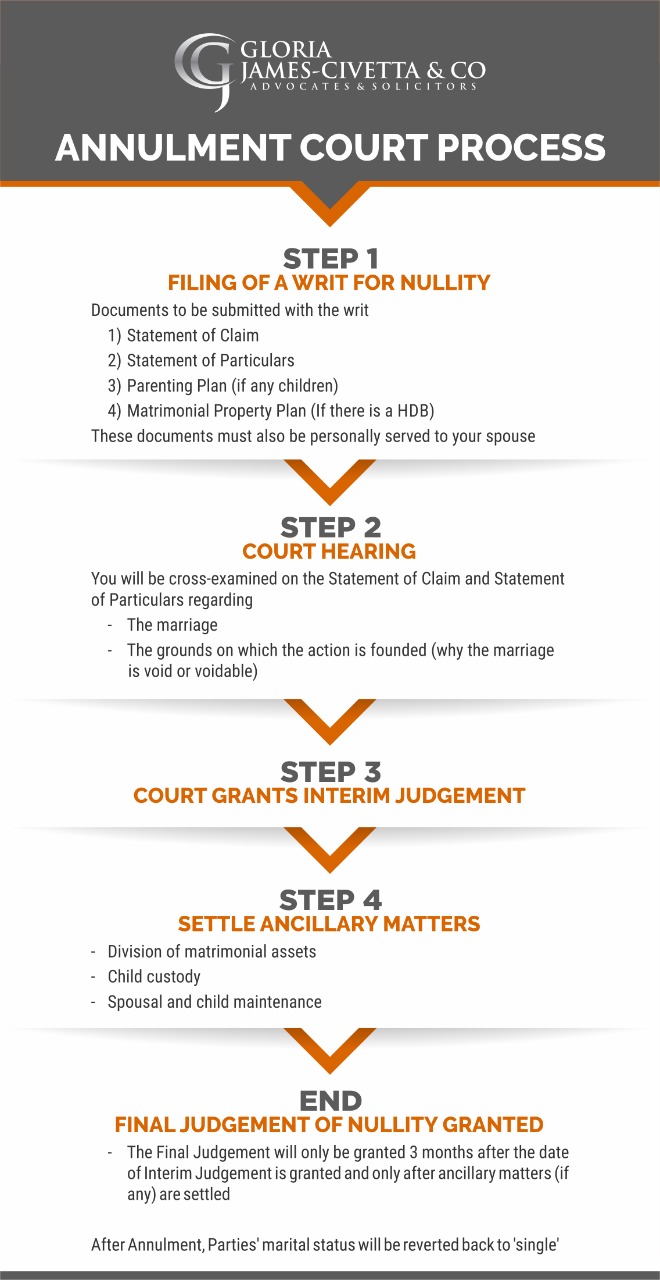
Annulment proceedings are dealt with by the Singapore Family Justice Courts. The precise procedure will depend on the circumstances of the case, including whether the application is contested, but the process broadly involves the following stages.
Step 1: Determine Whether the Marriage Is Void or Voidable
The first step is to identify the statutory ground on which the marriage is said to be void or voidable.
This is important because the legal requirements, possible bars to relief and applicable time limits differ depending on the ground relied upon.
Step 2: Prepare and File the Court Application
An application for annulment is commenced by filing an originating application for nullity of marriage.
The originating application must identify the ground or grounds on which the marriage is alleged to be void or voidable and provide brief particulars in support of those grounds. The required accompanying documents must also be filed in accordance with the applicable court rules and practice directions.
Step 3: Serve the Court Documents
The relevant court documents must generally be served on the other spouse in accordance with the applicable court procedure.
This gives the respondent an opportunity to consider the application and decide whether to contest it.
Step 4: The Respondent’s Position
If the respondent wishes to contest the application or the grounds relied upon, the respondent must generally file a Notice to Contest within 14 days after being served with the matrimonial application.
A respondent who wishes to contest allegations made in the application must generally file and serve a Reply within 28 days after service. A respondent may also, where appropriate, file a cross-application for divorce, judicial separation or nullity within the applicable timeframe.
Step 5: Court Hearing and Evidence
The Court must be satisfied that the statutory ground for nullity has been established.
Nullity applications are generally determined on evidence and submissions before the Court. Where the matter is contested, witnesses may be required to give oral evidence and be cross-examined. An uncontested matter may be dealt with differently depending on the Court’s directions.
Step 6: Interim Judgment and Final Judgment
If the Court is satisfied that the case for nullity has been established, it may grant a judgment of nullity.
As with divorce proceedings, the judgment is initially an interim judgment and is generally not made final until at least three months later, unless the Court fixes a shorter period. The final judgment formally completes the nullity proceedings.
The legal effect of the judgment depends on whether the marriage is void or voidable. In the case of a voidable marriage, the marriage is treated as having existed until the judgment of nullity is made final.
How Long Does an Annulment Take in Singapore?
There is no single timeframe that applies to every annulment application.
The time required will depend on factors such as:
- the ground relied upon;
- whether the application is contested;
- whether the facts or evidence are disputed;
- whether further evidence, including medical or other expert evidence, is required;
- whether there are ancillary issues involving children, maintenance or matrimonial assets; and
- the Court’s scheduling and directions.
An uncontested application supported by clear evidence will generally be more straightforward than a case in which the ground for annulment or the underlying facts are disputed.
If the Court grants a judgment of nullity, the judgment is initially an Interim Judgment. As a general rule, it cannot be made final until at least three months after it is granted, unless the Court orders a shorter period.
Where ancillary matters also have to be determined, those issues may affect the overall time needed to conclude the proceedings. The Family Justice Courts’ current forms and procedures expressly provide for a Final Judgment in nullity proceedings.
What Happens to Children After an Annulment?
An annulment does not mean that the legal status, welfare or financial needs of children simply disappear.
The Women’s Charter contains specific provisions dealing with children where a marriage is annulled. In particular, Section 111 preserves the legitimacy of children in the circumstances set out in the Act, notwithstanding the annulment of the marriage.
Where there are children of the marriage, the Court may also need to consider arrangements concerning their custody, care and control, education and financial support. The Court has power to make appropriate orders concerning a child’s welfare in nullity proceedings, and the child’s welfare remains the paramount consideration.
The consequences for children should therefore be considered separately from the question of whether the marriage itself can be annulled. Even where a marriage is declared void or voidable, appropriate arrangements may still need to be made for the children’s care, upbringing and financial support.
What Happens to Property and Financial Matters in an Annulment?
An annulment can still have important financial consequences.
The fact that a marriage is annulled does not necessarily mean that property and financial issues disappear. Under the Women’s Charter, the Court has power in nullity proceedings to deal with matters such as the division of matrimonial assets and, where applicable, maintenance.
Depending on the circumstances, issues may arise concerning:
- matrimonial assets and jointly owned property;
- maintenance;
- CPF monies connected with matrimonial assets or housing;
- HDB or other housing arrangements;
- joint liabilities and financial obligations; and
In deciding how matrimonial assets should be divided, the Court may consider matters such as the parties’ financial and non-financial contributions, debts incurred for the family, and the needs of any children of the marriage.
These financial and practical consequences should therefore be considered separately from the question of whether there is a legal ground for annulment.
What Happens to an HDB Flat After an Annulment?
This can be particularly important for couples who purchased or applied for an HDB flat on the basis of their marriage.
An annulment may affect the family nucleus upon which the parties’ eligibility to purchase the HDB flat was based. HDB’s prevailing policy on annulment differs from the rules which may apply following a divorce.
Where a marriage is annulled, HDB currently provides that neither party is generally permitted to retain the flat. An exception may apply where either party’s parents were originally listed as owners or occupiers in the application to purchase the flat.
If no party is eligible to retain the flat, the flat may have to be returned to HDB at the prevailing compensation price, subject to HDB’s approval.
Where the parties have only applied for or booked a flat and the purchase has not yet been completed, the annulment may also affect their continuing eligibility. HDB states generally that changes to household particulars or circumstances may render a flat application ineligible, in which case cancellation procedures and financial consequences may apply.
There may also be consequences for CPF housing grants or other housing subsidies received in connection with the flat. Depending on the particular grant, HDB’s terms may require repayment following an annulment.
For this reason, parties contemplating an annulment should consider their HDB position before the annulment is finalised and, where necessary, obtain confirmation from HDB as to how the prevailing rules apply to their particular flat and circumstances.
This can be particularly important for couples who purchased or applied for an HDB flat on the basis of their marriage.
What Happens After an Annulment?
The consequences depend in part upon whether the marriage was void or voidable.
In particular, section 110 of the Women’s Charter provides that a judgment of nullity concerning a voidable marriage operates to annul the marriage after the judgment is made final, and the marriage is treated as having existed until that point.
This distinction is important because the commonly used explanation that every annulled marriage is simply treated as though it never existed can oversimplify the legal position.
Other issues involving children, housing, maintenance and property may also remain to be resolved.
What If My Marriage Does Not Qualify for Annulment?
If you do not meet the legal grounds for an annulment, there may be other options depending on your circumstances, including:
- Divorce, if you satisfy the applicable legal requirements;
- applying for permission to file for divorce before three years of marriage, where there is exceptional hardship suffered by the applicant or exceptional depravity on the part of the respondent;
- entering into a Deed of Separation;
- applying for Judicial Separation; or
- living separately by way of an informal separation.
Read more: Alternatives if you have been married for less than three years
Frequently Asked Questions About Annulment
Both spouses agreeing to an annulment does not automatically mean that the Court will grant one. There must still be a recognised legal ground showing that the marriage is void or voidable under the Women’s Charter, and the Court must be satisfied that the statutory requirements have been established.
Potentially. Under Singapore law, certain marriages of convenience may be void.
For marriages solemnised on or after 1 October 2016, section 11A of the Women’s Charter provides that a marriage may be void where:
- party entered into the marriage knowing or having reason to believe that its purpose was to help either party obtain an immigration advantage; and
- gratification, such as money or another benefit, was offered, given or received as an inducement or reward for entering into the marriage.
However, the marriage is not void on this ground if it is proved that both parties reasonably believed, when entering into the marriage, that it would result in a genuine marital relationship.
Entering into a marriage of convenience may also amount to a criminal offence. Under section 57C of the Immigration Act 1959, a person convicted of entering into such a marriage may be fined up to S$10,000, imprisoned for up to 10 years, or both.
Further, where either party is convicted under section 57C(1) of the Immigration Act in respect of the marriage, section 11A of the Women’s Charter provides that the marriage is deemed void for this purpose.
Yes. Once the annulment is legally finalised, you will no longer be married to your spouse and will be considered legally single.
No. Regretting the marriage, separating shortly after the wedding or deciding together that getting married was a mistake is not by itself a ground for annulment. The marriage must still meet one of the recognised legal grounds for being void or voidable.
Your spouse can contest the annulment, but simply refusing to agree does not automatically prevent an application from succeeding. The court will consider the evidence and whether the legal requirements for annulment have been established. For voidable marriages, there are also specific circumstances under the Women’s Charter in which the court must refuse a judgment of nullity.
You should only remarry once the annulment has been legally finalised and you are legally free to marry. For a voidable marriage, the marriage is treated as continuing until the judgment of nullity becomes final.
Speak to an Annulment Lawyer in Singapore
Whether a marriage qualifies for annulment depends on the specific legal ground, available evidence and circumstances of the marriage.
This can be particularly important where the marriage is less than three years old, the proposed ground is disputed, or there are issues involving an HDB flat, children, CPF or other property.
Gloria James-Civetta, Head of Family Law at GJC Law, has approximately 30 years of experience in family and matrimonial matters.
If you are considering an annulment, our annulment lawyers in Singapore can assess whether you may have grounds for annulment, the evidence that may be required and the practical consequences.
You may arrange a Strategic Divorce Consultation to discuss your circumstances and next steps.
The consultation can be used to review your circumstances, the potential legal ground, supporting evidence and the practical implications before deciding on the next step.

We’re here for you
When you contact our matrimonial law team, we will provide you with a consultation, tailored to your specific circumstances and goals in mind.
Our goal is to help you find a resolution that works for you.

Legal Advice or Divorce Coaching: Where Do You Start?
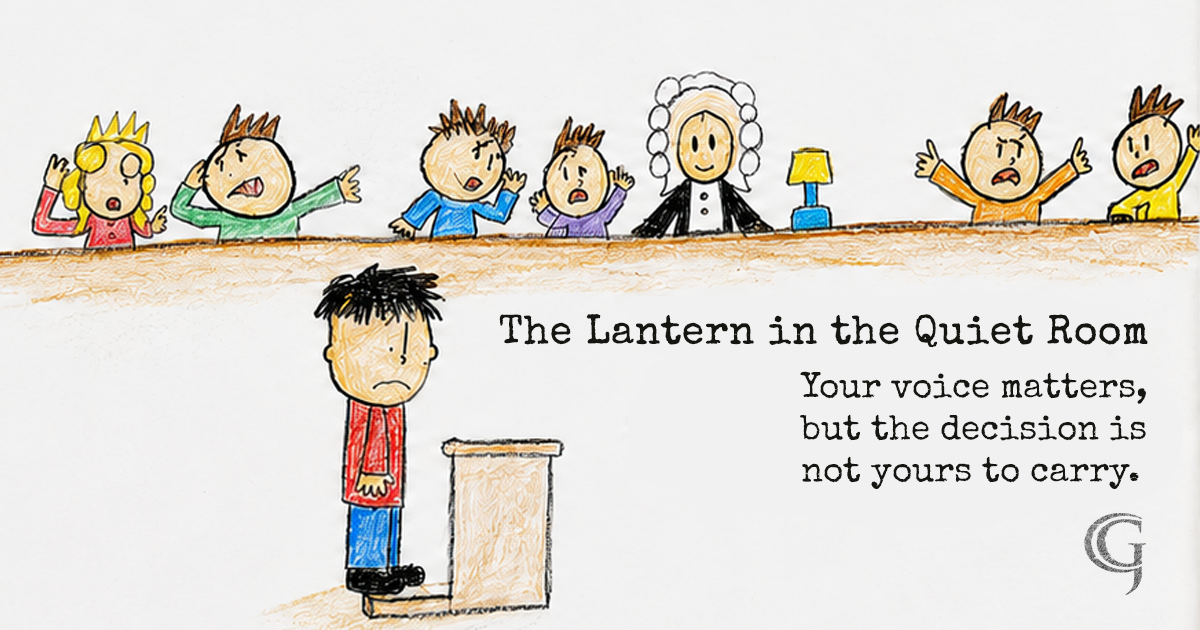
The Lantern in the Quiet Room

15-Month HDB Wait-Out Period Removed: What the Change Means for Divorcing Couples in Singapore

Considering Divorce? When to Seek Legal Advice and What to Know Before You Decide

What Happens to CPF Monies and Property Sale Proceeds After a Divorce Order?