
As a practising divorce lawyer, one of the concerns I regularly hear from parents is: “What will happen to my relationship with my child after divorce?”
For fathers in particular, there can be a fear that the mother will automatically be given custody and that their role in their child’s life will be significantly reduced. However, child custody in Singapore is more nuanced than simply deciding which parent “gets the child”.
Key Points
- Child custody and care and control are different. Custody concerns major decisions about a child’s education, healthcare, religion and other important matters, while care and control concerns the child’s day-to-day care and where they primarily live.
- Joint custody is generally preferred, reflecting the continuing parental responsibility of both parents after divorce. Sole custody is usually reserved for exceptional circumstances.
- A mother is not automatically entitled to care and control, and a father can be awarded care and control where this better serves the child’s welfare and best interests.
- Shared care and control may be possible where parents can co-parent effectively and the arrangement is practical and beneficial for the child.
- A parent who does not have care and control may still have access and an important ongoing role in the child’s life.
- Access arrangements can vary depending on the child’s circumstances and may include liberal, reasonable, fixed or supervised access.
- Above all, the Court focuses on the welfare of the child, rather than simply favouring the mother or father.
What Does Child Custody Actually Mean?
When we talk about child custody in a Singapore divorce, it is important to distinguish between custody, care and control, and access.
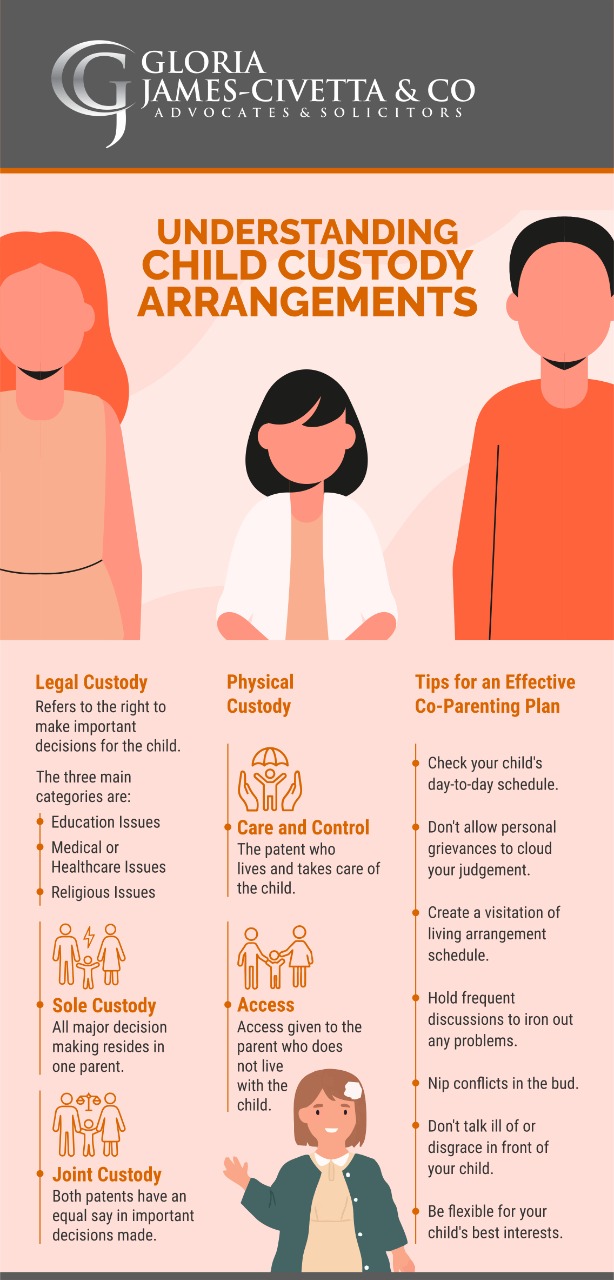
Custody concerns who has the authority to make major decisions about the child’s upbringing. Care and control concerns which parent the child primarily lives with and who is responsible for the child’s day-to-day needs. Access concerns the time the other parent spends with the child.
This distinction is particularly important for fathers. A father may hear that the mother has been given care and control and assume that this means he has lost custody or no longer has a meaningful say in his child’s life. That is not necessarily the case.
So, are fathers actually disadvantaged in child custody proceedings in Singapore, or does the law approach custody differently from what many parents expect?
Related Article: Custody Battles: 7 Things Dads Should Know
Distinguishing Custody and Care & Control
The Court of Appeal case of CX v CY ([2005] 3 SLR(R) 690) held that custody refers to the right to make significant decisions on issues about education, religion, medical, accommodation, and residency on behalf of the child.
Having joint custody would require both parents to carry out the duty jointly. As the law (SECTION 46 OF THE WOMEN’S CHARTER CAP 353) imposes a statutory duty on both parents to continue with this joint parental responsibility, it is only in exceptional circumstances that one parent shall be awarded sole custody.
Examples of exceptional circumstances include where one parent displayed physical or sexual or emotional abuse towards the child; or where the lack of effective co-parenting is not in the child’s welfare. In VDZ v VEA ([2020] SGHCF2), the Honourable Justice Debbie Ong stated;
Care and Control are defined as the custodial parent’s right, providing the residency arrangement with the ability to decide on the child’s daily matters and assume parental responsibility.
Related Article: Understanding Child Custody: Sole Custody & Joint Custody
Shared Care and Control
Where both parents are able to co-parent, the concept of shared care and control empowers the parents to decide on daily matters jointly and split their time with the child equally between the two separate households.
As noted in the case of AQL v AQM ([2012] 1 SLR 840), a specific set of circumstances ought to be satisfied before the court is convinced that such an order will be in the best interest having regard to the welfare of the child. Parents would be required to have a stable and cordial relationship for this to work, as the child will have to live and regularly commute between houses.
Related Article: Child Custody – Who will the Child Live With?
Sole Care and Control
Where one custodial parent is given sole care and control, it means that the child’s primary residence is with that parent. The non-custodial parent will only be granted access ie, visitation rights. The Singapore Courts typically grant sole care and control to the mother, when the child is below seven years of age.
The courts generally regard the mothers as the primary caregivers due to the maternal bond being one of the most unexplainable wonders of human nature.
Importantly, this does not mean an automatic right for the mothers to be granted care and control over their fathers.
The welfare and the best interest of the child are the ultimate tests when the court decides in awarding sole care and control to the father if he can show that he is the one in a better position to take care of the child, or that the mother has mental health issues and cannot care for the child.
-
Visitation arrangements for the parent not having care and control
- From a statutory standpoint (SECTION 126(2B)(b) OF THE WOMEN’S CHARTER CAP 353), access is not an automatic right as the court shall grant such access if the court considers it reasonable. When access orders are made, the parent can spend quality time with the child and maintain a healthy parent-child relationship.
- The main issue of contention is always, how much access should that parent have? Access is subject to the child’s needs and wishes and that parent’s previous contact and history of relationship with the child.
- The types of access orders made can be liberal, reasonable, or supervised. The parent having liberal access is free to arrange with the child or the other parent access time without limits. When reasonable access is ordered, then time limits apply.
- If there is a fixed schedule put in place, on some occasions, especially when the child is an infant or very young, or subject to domestic violence, supervised access shall be ordered.
- This means that an appropriate adult will supervise and oversee the parent-child’s access arrangement as it is necessary to protect the child. It is prudent for parties to have a parenting plan schedule to minimize conflict and put in place a routine for the child.
-
Visitation arrangements for the parent not having care and control
- Parents are encouraged to involve both the maternal and paternal grandparents in the child’s life. Grandparents can assist the parents in the caregiving arrangements. Unfortunately, when parties decide to divorce or cease cohabitation, it has occasionally resulted in burning the relationship with the in-laws.
- If the custodial parent denies the grandparents their right to visitation, they can apply to the court to seek visitation rights.
- The grandparents need to demonstrate that they had a meaningful relationship with the grandchild and that the custodial parent halted the visitation. It is interesting to note that the court is usually hesitant to defy the custodial parent’s wishes if it’s not in the child’s best interest. The court will typically preserve the right of the natural parents to raise their child without disruption and will not readily displace the parents’ authority.
Related Article: Grandparents’ Role in a Divorce Proceeding
My Reflection
I always encourage my clients to explore alternative dispute resolution avenues to settle their disputes in high-conflict custody battles. Where possible, it is preferable to reach a settlement on agreed terms rather than leave the decision entirely to the Court.
By placing the child’s welfare at the centre of the process, each parent is encouraged to view custody as an instrument of care and not a tool of control over the other parent.
If you have concerns about child custody, care and control or access, you are welcome to email me directly at gloria@gjclaw.com.sg.
Explore our Child Custody & Maintenance category for more articles on child-related issues.
Gloria James

We’re here for you
We have a dedicated family law team ready to listen, understand your situation, and advise you on:
-
- Child Custody & Maintenance issues;
- Access Arrangements;
- Parenting Plans;
- Relocation issues.