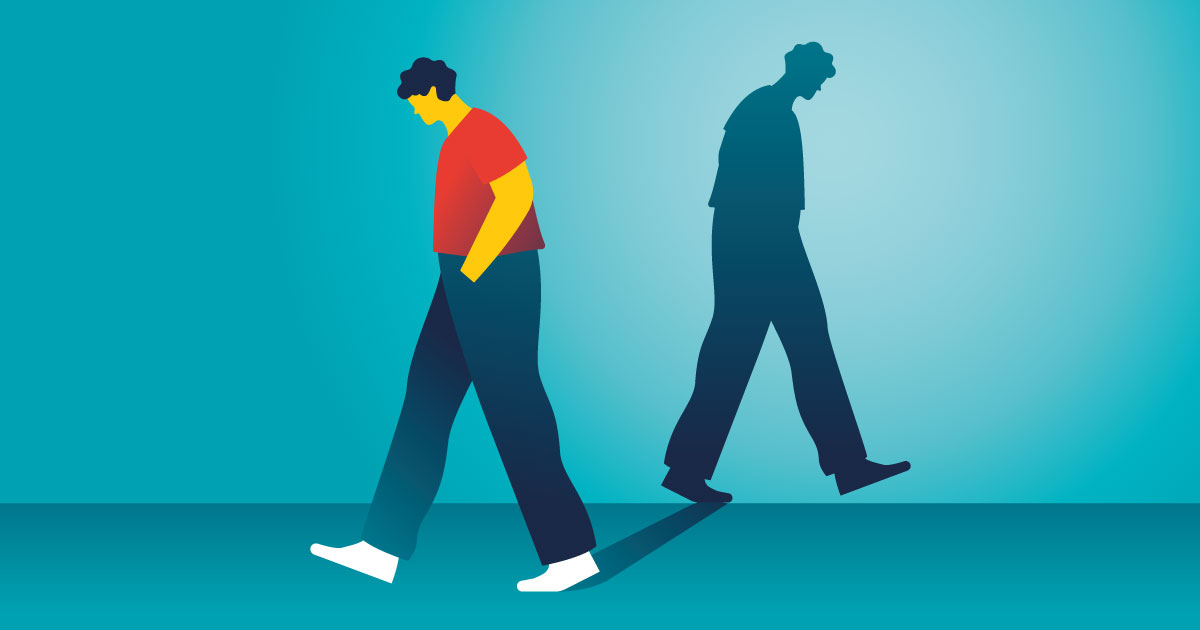
For some, the most frightening part of divorce is not the legal process, but the moment when they realise they may need to leave a spouse who is unpredictable, emotionally unstable, or mentally unwell.
You may still care about your spouse. You may worry about what will happen to them. You may fear their reaction. And if their behaviour has included threats, intimidation, manipulation, or violence, that fear is not irrational. It is your nervous system trying to protect you.
Leaving in these circumstances is not weakness. It is often an act of survival.
When Fear Becomes Part of Daily Life
Living with a spouse who struggles with serious mental health issues can create an environment where you are constantly alert. You may find yourself choosing your words carefully, avoiding certain topics, or walking on eggshells to prevent emotional outbursts. Over time, this can quietly shrink your world.
Some spouses use their illness to excuse behaviour that crosses boundaries. Others may genuinely be unwell yet still cause real harm. Both situations can exist at the same time. Compassion does not mean you must accept fear, control, or danger as the price of staying married.
In Singapore, the law recognises that abuse is not only physical. Emotional intimidation, threats, isolation, and financial control can also form part of family violence.
Setting Boundaries when Your Spouse is Unwell
Boundaries are not punishments. They are a way of protecting your safety, dignity, and mental health.
This may start with limiting how and when you communicate, keeping conversations practical and short, and refusing to engage when discussions become hostile or manipulative. Some people find it safer to communicate only by text or email once separation becomes likely.
Physical boundaries matter too. If your spouse has ever frightened you or become aggressive, it is reasonable to avoid being alone with them. Trust your instincts. If something feels unsafe, it probably is.
Financial boundaries are equally important. Quietly ensuring that you have access to your own money, documents, and identification can give you options later, even if you are not ready to leave immediately.
Planning to Leave Safely
You do not need to leave suddenly to begin protecting yourself. Many people start by preparing quietly.
This may involve keeping copies of important documents, saving emergency cash, and telling one trusted person what is happening at home. Some people keep a small bag packed with essentials in case they need to leave quickly.
If your spouse has threatened you or behaved violently, it is also wise to keep a simple record of incidents. Dates, messages, photos, or medical reports can become important if you later apply for protection or need legal support.
Legal Protection in Singapore
If you are afraid for your safety, you can seek protection even before starting divorce proceedings.
Singapore law provides several options to help protect you:
- Personal Protection Order (PPO) – to restrain a spouse from using violence, making threats, or engaging in abusive behaviour.
- Expedited Order (EO) – a faster, temporary order for situations where there is immediate danger.
- Domestic Exclusion Order (DEO) – to prevent an abusive spouse from entering or remaining in the shared home.
These measures are meant to create breathing space and physical safety. They are not about escalating conflict. Many people use them quietly while they take time to plan their next steps and consider their long-term options.
If you are experiencing threats, abuse, or harassment, our family law team at GJC Law has long-standing experience assisting clients with protection orders and related matters, and can advise on the options available to you.
Read more: Personal Protection Orders (PPO) and Divorce
If you Need Help Urgently
If you are in immediate danger, call 999.
If you need to speak to someone confidentially about abuse or threats, these services are available in Singapore:
National Anti-Violence & Sexual Harassment Helpline (NAVH): 1800 777 0000 (24 hours)
AWARE Helpline: 1800 777 5555 (weekdays)
National Mindline: 1771 (24-hour mental health support)
Samaritans of Singapore (SOS): 1767 (24-hour emotional crisis support)
If you need temporary shelter, Family Service Centres can help arrange crisis accommodation and safety planning. You can contact ComCare at 1800 222 0000 to be linked to the nearest centre. Protection Specialist Centres such as PAVE, TRANS SAFE Centre, and Care Corner Project StART also support individuals facing family violence.
You are Allowed to Choose Safety
Divorcing a mentally ill spouse is not a simple decision. You may feel torn between compassion and fear, loyalty and exhaustion, hope and reality.
But your life does not have to be defined by anxiety.
You are allowed to choose safety. You are allowed to protect your children. You are allowed to want peace. And you do not have to walk this path alone.
FAQs
Can I divorce my spouse if they suffer from mental illness?
In Singapore, you cannot divorce your spouse solely because they suffer from mental illness. The law only allows divorce on the single ground of irretrievable breakdown of the marriage, which must be proven through specific facts such as unreasonable behaviour, adultery, desertion, or separation.
That said, mental illness does not prevent a divorce from taking place. Where a spouse’s condition results in behaviour that makes it unreasonable to expect the marriage to continue, this may be relied upon in the proceedings under the ground of unreasonable behaviour. In other cases, parties may rely on separation or other facts to establish that the marriage has irretrievably broken down.
What if my spouse is unable to understand or manage the divorce process?
If your spouse is unable to understand or manage the divorce process due to mental incapacity, the proceedings can still continue in Singapore. The court may appoint a litigation representative (often a family member or another suitable person) to act on their behalf.
Medical evidence is usually required to establish whether such an appointment is necessary. This ensures the case is conducted fairly while protecting your spouse’s legal interests, and you would still need to prove that the marriage has irretrievably broken down through the usual grounds such as unreasonable behaviour or separation.
Will my spouse’s mental illness affect child custody?
Your spouse’s mental illness will only affect custody if it impacts their ability to care for the child or make decisions in the child’s best interests. Mental illness on its own does not determine custody or care arrangements.
The court’s primary consideration is always the welfare of the child, and it will assess whether the condition affects the parent’s ability to provide safe, consistent, and appropriate care. Where relevant, medical reports and professional assessments may be required.
Can I seek protection if my spouse becomes threatening or abusive?
Yes. In Singapore, you can seek protection if your spouse becomes threatening or abusive, even before divorce proceedings begin. Under the Women’s Charter 1961, the Family Justice Courts may grant several protective orders to safeguard you and your children:
- Personal Protection Order (PPO): Restrains a spouse from committing family violence.
- Expedited Order (EO): A temporary order issued quickly in urgent situations while a PPO application is pending.
- Domestic Exclusion Order (DEO): Excludes or restricts the abusive spouse from entering the shared home.
- Stay Away Order (SAO): Prohibits the spouse from entering areas around your home or other places you frequent.
- No Contact Order (NCO): Prevents the spouse from visiting or communicating with you.
- Counselling Order (CGO): Requires parties to attend counselling sessions.
- Mandatory Treatment Order (MTO): Requires the abusive spouse to undergo psychiatric treatment.
These orders are intended to provide safety and stability, not to escalate conflict. The court will usually require supporting evidence such as police or medical reports, and a breach of any order is a criminal offence
Will mental illness affect maintenance or division of assets?
Mental illness does not automatically affect the maintenance or division of matrimonial assets in a Singapore divorce. The Court considers each ancillary matter on its own merits, taking into account factors such as financial needs, contributions to the marriage, and the welfare of any children.
Mental illness may be relevant depending on the facts of the case; for instance, if it impacts earning capacity, medical needs, or future care requirements. In such circumstances, medical evidence and professional assessments may be relied upon. Ultimately, each case is assessed based on its unique circumstances.

We’re here for you
At Gloria James-Civetta & Co, we aim to find a solution that will work for you and your family. Our matrimonial law team will provide a consultation tailored to your circumstances and needs.